
2026 LA Growth Drivers: Today’s (and Tomorrow’s) Job and Career Openings
September 1, 2026

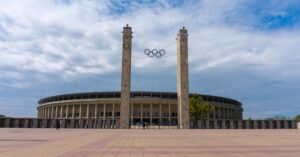
Last winter’s wildfires were extraordinarily damaging, reducing 62 square miles of urban and rural landscapes to ash and debris. Full recovery from the disaster will take time and the services of an untold number of workers, professional and otherwise, who are now tasked with identifying, redesigning, and repairing the failed infrastructure. The silver lining is that demand for workers in these occupations and industries has never been higher; not only must they clear away the fire debris and rebuild the burned areas, but they are also actively involved in rebuilding the city for the 2028 Olympics. To say there will be many jobs available in these sectors is probably a gross understatement.
Identifying Infrastructure Damage
Along with the thousands of buildings that were destroyed are the miles of roads, power lines, sewer and water lines that connected these now distraught communities to their service providers. As experts combed through the damage from the conflagration, they found several internal and inherent weaknesses in the pre-existing infrastructure that contributed to the high loss values, and also impeded a faster, more effective response by firefighters.
This edition of The Pulse examines how LA’s water supply infrastructure fared during the disaster. An adequate and safe water supply is fundamentally essential to every civilized community, so when that system is disturbed or destroyed, it is critical to get it back online a quickly as possible. The second January edition of the Pulse looks at the ‘engineered’ infrastructure and how the fires impacted its performance and safety. The region’s roads, utilities, and other foundational elements all experienced severe deterioration due to the heat and flames; recovering those services as quickly and fully as possible will also be essential to fully restoring the community.
The Water System
As is typical for disasters of this magnitude, the subsequent review and analysis reveal how the design and construction of the pre-event systems were affected by the unforeseen effects of the fires. Notably, investigators found that the decades-old water systems that laced a net beneath the city were particularly challenging during the disaster, as they were not designed to handle a blaze of the scale of the one that occurred in January 2025.
Specifically, LA’s 1940s-era ‘tank and hydrant’ water supply system ran dry during the battle, not because there was an insufficient volume of water, but because its design was aimed at combating house fires. It simply wasn’t extensive or robust enough to encompass a ‘full neighborhood’ scope of active flames. The hilly areas of LA were designed with this ‘pump and tank’ storage system‘ that collected water in downstream reservoirs and then pumped it up the hills into higher elevation storage tanks. When fighting house fires, the tanks fed downhill water hydrants located in the vicinity of the afflicted dwelling. During the 2025 fires, however, there wasn’t enough stored water available in those uphill tanks to supply the whole network of downhill hydrants, so both tanks and hydrants quickly ran dry.
Additionally, one-quarter of the region’s hydrants (24%) were also simply too small for today’s modern firefighting equipment. Their 2.5-inch water outlets were not capable of connecting to today’s updated hose dimensions, which rendered them completely obsolete during Winter ‘25. The American Water Works Association has already declared that this style of hydrant is no longer suitable for providing adequate fire protection.
Other difficulties also contributed to the high cost of losses:
Extensive Repairs and Replacements are Needed
Experts have weighed in on what needs to be done to resuscitate the affected water systems.
One tool that will provide critical data for the evaluation and design of the new systems is the Water Demand Calculator, developed by the International Association of Plumbing and Mechanical Officials (IAPMO). California adopted this water management tool in 2024 because of its adherence to the organization’s WE.Stand code, which optimizes water use in the face of climate, fire, drought, and other environmental threats. Using the Calculator, builders can more accurately measure the size of water pipes before they install them to ensure sufficient pressure even during high-demand times.
Another resource available for guidance during the rebuild effort is the National Fire Protection Association (NFPA), which develops municipal codes specifically to reduce the damage caused by fires. One opportunity that might be appropriate in hilly Southern California is a firefighter breathing air replenishment system (FBAS), a hard-piped network installed into infrastructure systems that facilitates the replenishment of clean air into firefighter scuba tanks on the scene of the fire itself. Now mandated in Phoenix, AZ, the FBAS was devised after 9/11, when First Responders found themselves many stories up but out of fresh air in their tanks.
As LA begins its rebuilding effort in earnest, these concerns must be addressed to ensure the damage suffered in 2025 won’t be repeated in the future. And, given the growing impact of climate change on the State’s drier regions, these new systems must be designed to anticipate similar conditions while delivering better results.