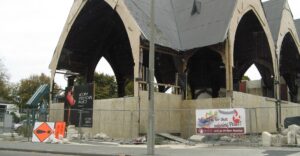
Resilience’ is more than an attitude that encourages optimism in the face of disaster. From an engineering perspective, ‘resilience’ is also a practice that assesses the short-, mid-, and long-term impacts of calamities to ensure the recovery process includes a full scope of safeguards and considerations to prevent similar events in the future. In LA’s current recovery efforts, engineers of all types are evaluating both existing and emerging tools and systems to determine which offer the best response to their then-specific concern. By developing repair and rebuilding capacities using both traditional and innovative lenses, recovery professionals are intending to bounce back from the fires while improving protections and preventions at the same time.
Engineering Processes Embrace All Elements
In the ‘
built’ environment, engineers are assessing structures above, below, and within buildings that have been damaged or destroyed by the fires. They’re also assessing the often hidden
infrastructural aspects of the community, including roads, water systems, underground sewers, above-ground power grids, and the like. Each element, individually, is a critical component of the community’s fundamental operating system; the connections between them ensure that the community benefits from comprehensive interactions among them all. Accordingly, as the rebuild process continues, each individual project will consider and make adjustments for all of these elements as they pertain to the specific system under repair or reconfiguration.
A Fortified Foundation
At this moment, ‘rebuilding LA’s foundation’ post-flames means more than just replacing its literal hardscape. Even apparently sound concrete walls can have hidden cracks and crevasses that will fail under the right circumstances. Further, the rebuild opportunity itself allows for expanding service capabilities and defenses against future environmental challenges beyond fires, including floods and earthquakes. A series of emerging tools and skillsets offer as-yet unmatched insights and expertise:
- Software programs now provide end-to-end solutions for all aspects of a foundational build, from bidding out projects to code compliance analysis. Today’s AI and 3D modeling facilitate comprehensive investigations not just of materials but also of strategies, blueprints, and plans. Some include ‘sustainability calculators’ that direct users to alternative, green options they might not previously have considered.
- Actual building and construction tools and practices are also evolving:
-
- Robots and automation are now making many on-site tasks easier and faster to complete, as well as safer and longer-lasting.
- 3D printing is being implemented as a foundation-building tool, crafting 3D-printed foundation parts and systems. These sophisticated devices reduce the time and labor previously needed to frame, pour, and cure a concrete footing.
- ‘Smart’ materials and tools provide on-site data with unparalleled accuracy. Clever solutions like ‘self-healing’ or translucent cement, and IoT (Internet of Things) sensors allow users to make decisions based on real-time data, and select and deploy the environmentally appropriate materials they choose to use.
A Hardened Exterior
Specifically in relation to fire danger, fortifying a building’s exterior provides preventative barriers and automatic retardant features to reduce the likelihood of a fire’s ignition or the spread of an existing conflagration. In the LA region, newly constructed homes and businesses are using concrete and metal for exterior surfaces, replacing the wood- and shingled exteriors of the past. Steel framing, metal roofs, and even ember-resistant venting systems will slow or extinguish a spark before it can flare up into a more dangerous flame.
An Integrated Solution
As a silver lining to fire-caused losses, a rebuild that resolves existing fire-damage problems and integrates features that protect against both flames and earthquakes is an optimal choice. A comprehensive evaluation of the land on which the building sits is necessary to detect its capacity to withstand an earthquake. Data collected from that assessment can be used to select appropriate materials and to develop overarching systems and strategies to protect the structure during the next event, whether it’s a fire or an earthquake. Not only will the resulting construction be more solid and secure than its predecessor, but it will also provide a more structurally sound basis for the surface finishes that will follow.
An Upskilled Workforce
The demand for an enhanced built environment post-2025 fires is also driving innovations in workforce development. Construction skills have advanced well beyond hammer-and-drill capabilities; today’s digitally based construction tools and machines also often require advanced training so users can realize the full value of those investments.
- Building Information Modeling (BIM) uses cutting-edge technology to create data-rich project elements, including plans, blueprints, designs, and operational details. Properly configured, these sophisticated tools can guide all aspects of the building project, including highly detailed visualizations (to keep everyone on the same page), budgeting, crew oversight, code compliances, and more. The 3D renderings offer collaborative opportunities and project-wide management capabilities that connect the efforts, activities, and goals of all involved professions and trades.
- Not surprisingly, data analysis is a critical component of today’s construction industry, as it is in almost all industries. Both on-site and in the design studio, modern sensors and embedded software gather information that’s relevant to virtually all members of the design and build team. Well-trained analysts use that data to identify cost savings, safety concerns, scheduling challenges, and even resource allocation, reducing waste and improving long-term performance for the construction team.
- ‘Green’ building expertise is also on the rise as an in-demand construction skill. The global nature of today’s markets requires most high-level construction professionals to be aware of international environmental mandates, even if they aren’t required for the specific project at hand. “ESG” goals – environmental, social, and governance – help every company develop and maintain a sustainable, ethical, and environmentally sound building practice that invites accolades and new clients. These days, investors are increasingly seeking ESG-standard investment opportunities, seeing those values as the foundations for future wealth and stability. ESG-related data can also shape corporate expectations, attract talent, and enhance a company’s reputation.
At a minimum, the rebuilding of LA and its fire-ravaged communities requires investment and effort to replace what was recently lost and protect against threats that will certainly emerge in the future. As that process moves forward, the community will gain in many ways:
- its economy will recover through the rebuilding process;
- its built environment will be better able to withstand future environmental threats, and
- Its workforce will be better skilled to provide the services and capabilities demanded by those enhanced physical environments.
In short, LA is building ‘resilience’ into its infrastructure, so that the community – and the City itself – is better able to withstand future threats and concerns, confident that losses will be minimized and progress can continue on.
Relevant, timely, insightful. Join our mailing list to get the latest news about Economic Workforce Development.