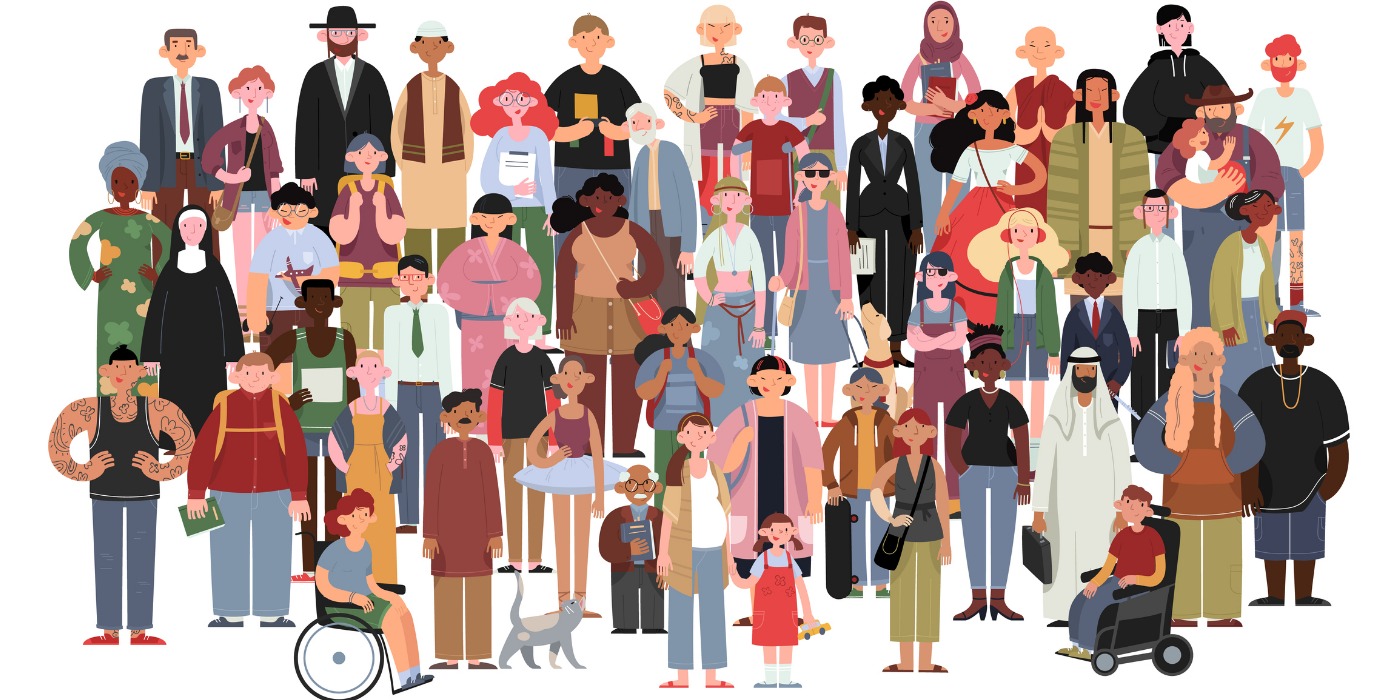
Intentional Change – Retooling for Equity’s Sake

Pam Sornson, JD

October 18, 2021

The phrase ‘life-long learner’ has, perhaps, never been as relevant as it is today. People have to learn new ways of thinking, working, and communicating just to maintain their status quo. Experts suggest that technological and social evolutions will require the reskilling of up to a billion people so they can find work in the emerging re-engineered global economy.

Organizations are having to learn new things, too. Their long-entrenched strategies no longer meet the needs of their core constituents because the population of that constituency is rapidly becoming more diverse. To remain competitive, the enterprise must identify and address the hidden inequities and social injustices that are deeply embedded in its culture and that negatively impact its new consumer base. Companies can overcome these barriers to progress when they are willing to learn the full depth and breadth of their inequity problem and take steps to change their processes in response.


Identifying Diversity – It’s Not Just ‘Black’ and ‘White’

Creating a truly diverse workforce requires insight and awareness about what ‘diversity’ really means. For many leaders in ‘traditional’ companies (those managed and populated by nonminority leaders and workers), that definition is broader than they know. In many cases, the biases spring from long-held cultural standards that aren’t readily apparent, and those who hold them aren’t always aware of their inappropriateness.

For example, ‘White’ dominance is one such bias that is buried deep into the foundational cultures of many societal organizations. It remains entrenched through the use of ‘racially specific’ labeling, where companies that are affiliated with non-White owners or leaders are identified by that distinction. White-owned organizations such as banks, restaurants, etc., are identified simply by their business activity. A Black-owned business, however, is identified as a ‘black business.’ This skewed labeling convention obscures the fact that ‘White’ is also a racial identifier; add ‘White’ to the label of every business, and its dominance in most markets becomes more apparent.

While racial (White versus any other skin color) and gender (male vs. female) biases are often the most obvious, the list of other circumstances that generate and empower prejudice and discrimination is long:

Workplace discrimination continues to limit opportunities for females and minorities, keeping them in lesser-paying jobs with fewer opportunities for advancement.

Age discrimination eliminates the corporation’s opportunity to gain from years of experience and knowledge.

Disability discrimination eliminates valuable employee and leadership resources simply because some people function differently than others.

Pregnancy discrimination continues to impede economic and career progress for women. Between 1997 and 2011, pregnancy discrimination claims filed with the Equal Employment Opportunity Commission jumped by 50%, and that volume of complaints hasn’t changed much since.

The elimination of biases from any organizational culture requires becoming aware of these and other hidden but insidious forms of discrimination.


Diversity = Economic Advantage

Pursuing diversity also makes good business sense. Companies that hold on to biases of any kind don’t often understand that that attitude also often erodes their economic advantages. These organizations typically don’t develop the ‘inclusive’ culture that supports every worker equally, regardless of their personal background or traits. Those workers respond by being less productive and less engaged in pursuing corporate success.

For example, one study found that, too often, corporate leadership believed its organization maintained a robust, inclusive culture, but its workers disagreed. A 2020 Accenture survey found that 78% of C-Suite respondents were proud of their ’empowered environment’ while only 32% of their workers reported feeling fully supported and included in their work environment. In another review, the French government determined that ubiquitous workplace discrimination within its fundamentally biased culture was also causing ‘staggering’ economic losses. Christian men were heavily favored for hiring over Muslim men by a four-to-one ratio, and women, in general, earned just 88% of their male counterparts for doing the same job. The analysis was done in 2015, and it concluded that the country could expand its GDP by up to 7% over 20 years by increasing access by women and minorities to training and skilled jobs.


Learning Lessons from Successful DEI Strategies

Decades of research may now be paying off as more companies pledge to improve their organization’s diversity. Many enterprises have been actively working on routing out inherent biases within their divisions, and some progress is being made, albeit not in all sectors:

College success numbers for employed Black Americans are rising, with approximately 20% holding Bachelors’s degrees. Black people also represent 12% of the total workforce, close to their 13.4% representation in the general population.

People with Asian ancestry are also educationally successful, with 65% of working Asians holding a Bachelors’s Degree.

However, the Latinx community hasn’t advanced as much, with only 22% of employed workers reporting achieving a Bachelor’s degree.

These successes and concerns indicate that corporate DEI progress is attainable when entities intentionally pursue those goals as an element of their fundamental culture. They confirm that intentionality must be an essential element in the strategy of organizations that are just now seeking to attain those goals. And media coverage of ongoing human tragedies caused by unfettered bias is driving the global impetus to pursue even faster a fairer corporate DEI culture.

Companies that want to improve their internal DEI successes can learn lessons from those that have already begun or mastered the process. One think tank suggests approaching a more robust DEI culture using a four-part strategy:

    1. Make it a moral imperative, not just a business case. Studies demonstrate that a diverse workforce can be more productive and profitable than one that is not. These days, however, people are looking for companies that share their values and intentionally work to benefit their communities as well as their shareholders.
    2. Encourage open conversations. In most cases, it’s more effective to use words that are meaningful but that are also uncomfortable. For example, using the word ‘race’ might be less comfortable than using the word ‘diversity,’ but it is also more specific in addressing the particular problem.
    3. Revise obsolete DEI programs. Recent events reveal the need for a more enlightened diversity perspective, rendering obsolete existing DEI plans developed years ago. They may also be siloed in HR departments and don’t reach the whole corporate sphere.
    4. Embrace the DEI culture through all career life stages. Becoming DEI-fluent means more than just hiring a diverse workforce. It also includes ensuring promotions, offering comprehensive retention benefits, and providing adequate career development resources for all employees.

These lenses provide well-informed guidance for companies seeking to improve their DEI culture.

The capacity to learn is becoming a crucial element of success for every entity – people, businesses, industries, and especially societies. The data suggest that improved corporate performance and profitability can happen when organizations learn what diversity is, why it’s essential, and how to entrench it into fundamental business practices. Now’s the time.

Strategizing the Post-COVID Economy

Pam Sornson, JD

Job development isn’t always an indicator of a robust economy when many of those job openings go unfilled. And unemployment isn’t always a harbinger of a horrible future when those unemployed workers are eager to work. Both circumstances present challenges and opportunities; the trick is to re-envision and restructure them to coordinate with each other. Recrafting job skills to meet emerging job demands solves both problems. It provides workers with the skills they need to find a job and businesses with the skilled workers they require.

California’s current economic situation lends itself to this very concept. Economic disruptions forced millions of people out of work while emerging opportunities leave thousands of companies without the skilled workforce needed to supply them. Fortunately, there’s a plan in place and a program already launched to address these realities, and they both flow through the State’s Community College system.


Economic Disruptions Create Chaos

A triad of major disruptors created chaos across California’s economy over the past 19 months.

The Covid-19 Pandemic

The eruption of the coronavirus in February 2020 almost immediately shut down the State’s economy. The number of unemployed people rose from ~350,000 in March 2020 to a peak of over 4.5 million in May 2020 to where it sits now at approximately 600,000 as of August 18, 2021. However, job openings surged through Spring 2021 as COVID-19 vaccines allowed businesses to open again, which was good news despite impositions of restrictions and capacity limitations. The Coronavirus Delta variant has slowed job growth over the summer, but increased vaccination rates promise to accelerate it again as Fall advances.

Climate Challenges

Climate changes threaten regional economies across the State, too. California’s 2018 fire season cost $150 billion in damages, impacting virtually all industries, from tourism to logistics. Smoke from the fires also affects economies, generating significant air pollution that aggravates existing health concerns. Rising sea levels contribute to economic woes, too. Based on current conditions, billions of dollars of infrastructure and property along the State’s coast are in jeopardy of loss due to elevated water levels. And an increasingly alarming rise in the State’s general temperature threatens everything from California’s agriculture industry to its transportation systems.

Advancing Technology

The coronavirus drove an unprecedented embrace of technology as millions of employees took their work home and embraced their new fully ‘remote’ status. In addition to that growing demand for technological devices, there is also an increase in demand for technicians to manage those devices, maintain their programming, and connect them with the ever-growing cloud-computing sector. Innovations in Artificial Intelligence (AI) and Machine Learning (ML) will further enhance the already burgeoning California IT sector.


Emerging Economic Opportunities

Each of these disruptors caused immense economic damage by shutting down some aspects of the state economy, eliminating millions of jobs and occupations, and forcing an unprecedented overhaul of ‘how work is done’ in millions of businesses. As the pandemic passes, economic experts are evaluating how to recover from its damage by addressing those factors and conjuring new expressions of ‘work’ that will fit in the emerging economic landscape. One such expert is Burning Glass Technologies (BGT), an analytics software company that tracks labor market and industry data.

For its Spring 2021 report, After the Storm, BGT reviewed one billion+ current and historical job postings to determine which jobs and job skills are most likely to dominate the markets as the State recovers from its economic devastation. Their premise is that California can better strategize a recovery from the disruptions by understanding how those impacted individual industries and whole industrial sectors. The State can then direct both effort and investment into plans and programs to build a new economy, not just attempt to replicate the old one.


BGT Conclusions

Fundamentally, BGT projects the addition of 15 to 18 million new jobs across the country over the next five years, which will also compel an immense labor shift. Many of the new occupations will demand different skill sets from those currently in use, and many of those skill sets will require new or additional training than that which is now available. In BGT’s mind, the situation creates a disconnect between existing workforce development capabilities and those that will be needed in the future.

Most notably, BGT surmises that economic growth will flow not just from industrial development but also from the growth of segregated, skill-based ‘economies’ that overlay the traditional industrial structure and will be revenue generators in and of themselves. Their research indicates that today’s required skills sets have changed significantly from those in the past and that technological advances will drive a similar evolution over the next decade. Workers who gain these advancing skills will be highly popular and well paid and can work at virtually the job of their choice in almost any industry.

To better explain the fluidity of the emerging skill sets, BGT describes them in the context of the ‘five economies’ in which they are deployed:

The Automated Economy requires enhanced and evolving technological comprehension, as its technicians design, deploy, and maintain machines to perform mundane tasks with more efficiency and effectiveness than is possible with human labor.

The Green Economy overlays all businesses and industries as it mandates and deploys its environmental policies and practices across all sectors.

The Logistics Economy provides the understructure of manufacturing and transportation productivity to all the world’s industries by ensuring that goods are appropriately packaged, transported, and delivered to global destinations.

The Readiness Economy ensures that societal, physical, and industrial infrastructures remain steady, available, and reliable, such as those in the healthcare, transportation, and public safety sectors.

The Remote Economy offers workers and businesses work-day flexibility that they’ve never before experienced. With no physical tethers to an office, many workers will be able to provide their unique services from any location with a reliable internet connection.

Each of these economies promises remarkable job and industrial growth opportunities for entities that have suffered through the recent economic disruptions. Now is the time to build a responsive workforce development capacity to develop and engage them fully. The State of California has tapped its community colleges to establish those enhanced and enlightened training programs.

PCC Coordinates the CCCCO Regional Collaboration Grant

Pam Sornson, JD

California needs a new strategy to rebuild its economy after the economic disruptions caused by the COVID-19 pandemic, climate change, and immense technological innovation. Its 116 community colleges (CCCs) offer an exceptional opportunity to build out a ‘workforce development (WFD) pipeline’ that responds to the emerging economic demands. Historically, the CCCs have acted as stand-alone entities, developing programs and courses responding to their local community needs. While they are organized into regional consortia’s and do communicate with each other, collaborating with each other as a coordinated, educational infrastructure has been challenging at times. That’s about to change.


The Regional Collaboration and Coordination Grant

In Theory

In June 2021, the CCC Chancellor’s Office (CCCCO) released a grant application request (RCC Grant) seeking CCC coordinators to organize a WFD framework strategy that engages all the colleges in each of the State’s eight CCC regions. It’s a daunting concept. The eight regions encompass California’s 116 community colleges, and each ‘collaboration’ will include all the schools within the individual region. The intent is to develop a unified framework of WFD programs as a single regional asset that responds to the region’s specific labor force demands. Such a coordinated strategy will reduce the redundancy of effort and the waste of financial and human capital as each school pursues its own WFD projects. It will also streamline best practices around any particular industrial or economic sector so that learners receive the best training possible to achieve their personal – and their employer’s – goals.

More specifically, the RCC Grant pursues two overarching goals:

1 Consolidating the Processes of School and Work

Regional activities will combine the efforts and aspirations of the CCCs with those of their corporate neighbors to ensure jobs and careers for students while generating a reliable supply of skilled talent for industry.

As the pandemic recedes (which it will eventually), businesses will be reinventing their processes to respond to that drastically altered economic landscape. They’ll need well-trained and skilled workers to maintain their market share and achieve new objectives. At the same time, students of all ages will require new or upskilled education to qualify for those jobs. Having one inform the other assures the success of both.

2 Addressing Inequities

Eliminating the entrenched inequities that now exist in all aspects of every community will be crucial to the region’s ultimate success. The social upheavals of the past year exposed how deep those biases run and the immense toll they take on the entire community, not just the affected people. The RCC Grant seeks to address these challenges through directed efforts by the CCC system.


In Practice

In practice, the RCC Grant requires significant engagement between school and business to ensure that each gains the intended benefit of the collaboration. It specifically identifies the interactive initiatives it’s looking for, giving regional leadership a diagram on which to build their WFD structure:

Comprehensive Supports are to be built in to the process to ensure that every student, regardless of their individual circumstances, has the assistance needed to achieve their educational and career goals. This tenet includes all barriers, from learning challenges to economic hardships.

Credit for Prior Learning will envelop the already existing skills and abilities earned before college. Military, work, and other life experiences often provide similar if not superior knowledge and skills, which may count as credit towards the student’s credential attainment.

Resilient 21st Century Digital Skills and Literacy will ensure all graduates bring cutting-edge digital qualifications to their work.

Earn and Learn experiences that will provide both education and income while still in college. Too many students can’t or don’t complete their programs because they can’t pay their living expenses if they’re not working while attending school.

Data-informed investments that will ensure all decisions are based on current facts and information, have measurable goals, and produce metrics related to the success of individual projects and the RCC initiative as a whole.

Not least significant, the RCC Grant instills in each region the mandate to pursue these goals not just in existing businesses and industries but also in the emerging economies identified in the Burning Glass Technologies report, After the Storm. Investments in whole new departments and resource sets may be necessary to ensure that the Los Angeles region can supply every employer with an appropriate, comprehensively trained worker regardless of industry or economy.


The Los Angeles Regional Consortium

Currently, the schools in each region are organized into ‘consortiums,’ with leadership from each school contributing to the governance of the whole region. These consortiums have been tasked with identifying a coordinator for their specific region; the CCCCO grant will fund the operations of the collaboration effort.

When the Grant’s RFA was issued, the Los Angeles/Orange County Regional Consortium (LAOCRC) was the overarching coordinator of the efforts of CCCs in both Los Angeles and Orange Counties. However, to achieve the purpose of the RCC Grant, the CEOs of those schools elected to divide the consortium into two separate regions, one in each of the two counties. It will be easier to coordinate the efforts of a smaller number of institutions in each county, which will improve their opportunity to achieve the RCC’s ultimate goals.

There are 19 CCCs in the newly classified Los Angeles Regional Consortium (LARC), the largest region in the state. The LARC is now tasked with weaving into its Strong Workforce Program (SWP) initiatives the mandates required by the RCC Grant. Fortunately, those SWP assets are robust and evolving. They include seven workforce development boards and hundreds of industry stakeholders, civic leaders, and organizations, all invested in improving the County’s WFD systems.

The CCCCO selected Pasadena City College (PCC) as the coordinator and fiscal agent for the LARC RCC Grant, with the school’s Economic and Workforce Development department (EWD) taking on the work of the project. For three+ years, PCC’s EWD has invested time, talent, and resources into building an engaged, informed, and forward-thinking program that connects PCC students to the jobs they want and the employers who want them. While still young and with grand plans for its future, the EWD has already established leadership and systems for both Student Success and Work-Based Learning and routinely communicates with its LA County community through The Pulse newsletter and its companion podcast. The EWD leadership demonstrated by Executive Director Salvatrice Cummo and Director of Operations Officer Leslie Thompson demonstrates their deep knowledge of the WFD arena and their equally deep commitment to the success of both PCC students and the school’s business and industrial community.


Rebuilding California’s economy after the devastation of the past two years is a formidable task. Designating its community colleges to invest their public and private resources into the project is an enlightened act, signifying the State’s confidence in both its higher education systems and its immense commercial community. Pasadena City College is immensely proud of its new role as RCC Grant Coordinator for the LARC. It will both strive for excellence throughout that initiative while communicating its progress to all its constituents.

Future of Work: Advancing Equity

It’s like the COVID-19 pandemic drew a line in time: long-held beliefs that were ‘acceptable’ before its arrival are almost unthinkable after its devastation. The long-running health crisis surfaced innumerable social divides, and the turbulent times allowed people to openly react to those, in some cases for the first time. Consequently, in many sectors of society, leaders are now investing in equity-based initiatives that promise to resolve age-old injustices and facilitate both a happier community and a more robust economy. 


From Premise to Practice

It’s not that the awareness of the ‘equity’ challenge is new, however. The ‘diversity, equity, and inclusion‘ – DEI – impetus has been rising for some time, and the pandemic seems to have pushed it further into the forefront of social consciousness. What IS new, it seems, is the push to not just talk about it but to actively pursue the embrace of DEI principles as an embedded aspect of doing business in every business. Companies across the country are reviewing their existing policies on DEI concerns and revising them to advance those ideals into practices that actually accomplish the goal of ‘inclusion’ of humanity’s broad scope of ‘diversity’ in all corporate corners.   

In many cases, the success of these newly articulated practices depends on the success of the strategy used to implement them. The non-profit community offers relevant lessons on how to develop that strategy.


Alliances Add Emphasis

There are 50+ non-profit entities that make up the Alliance for Strong Families and Communities (Alliance), all of which embrace DEI principles as a fundamental aspect of their corporate personas. From the American Alliance of Museums to the YWCA, the work of these organizations impacts millions of lives across America.  

In Fall 2020, the Alliance announced its statement of guiding principles to advance racial equity and justice. Those principles are notable not just in themselves but also in the fact that so many entities actively asserted their relevance within the individual organizations. In a nutshell, the Alliance as a whole is committed now to:

dismantling systemic racism to redress previous discrimination

through programmatic practices and public advocacy for change

with investments in an enhanced social network to better serve all communities in their schools, healthcare services, and economic opportunities.

The aggregate impact of all that effort to level the playing field for all people promises to be immense and significant. 

At the same time, the Community Science organization, also deeply engaged in promoting DEI policies and practices, published its five-point strategy to advance equity and justice. The five points offered by this philanthropic think tank offer clarity to ground the ‘how’ into building a truly DEI-sensitive organization:

    1. Lead the way. Actively cultivate a diverse workforce and openly embrace all the significant tenets of each of those individuals. Then apply those inclusive principles to every transaction. 
    2. Recognize the size of the challenge. In America, too many artificially segregated populations face insurmountable barriers to progress because of centuries of discriminatory policies. The strategy to overcome them should acknowledge that it will take time to dismantle them. 
    3. Prioritize activities that generate change. These days, those activities should include active advocacy, focused messaging, and the use of data to underscore facts.  
    4. Maximize the organization’s existing role within the larger ecosystem. Every company – for profit or not – holds a specific niche within the community. Leveraging the relationships that evolve within that community can also leverage the advancement of fairer practices. 
    5. Look beyond yesterday’s limitations. Previously impenetrable barriers are eroding and opening avenues to change, improvements, and advancements. Look for and embrace those opportunities.  

Becoming a more equitable community means recognizing the destructiveness and economic devastation wrought by centuries of prejudice. It’s heartening to see so many community leaders actively engaging in practices to remediate those systems and the damages they caused.  


Sharing Insights and Opportunities

These timely discussions underscore the significance of Pasadena City College’s (PCC) upcoming Future of Work Conference and its theme of Advancing Equity, Inclusion, and Diversity: Beyond the Benchmark.’ Running virtually from 9:00 am – 11:30 am PST, Tuesday, November 9th, the conference promises a lively conversation among DEI experts to enlighten and inspire attendees. (Register here.) 

Co-hosted by PCC’s Economic & Workforce Development Director Salvatrice Cummo and Dr. Kari Bolen, PCC’s Chief Diversity, Equity, and Inclusion Officer, the conference is gathering speakers who have ‘moved the DEI needle’ in their respective sectors. While more panelists are coming, attendees will hear from these confirmed speakers:

Keynote speaker Dr. Vijay Pendakur brings his DEI talents to Zynga, the maker of the game ‘Words with Friends®’ and many other globally successful games. OVerseeing staff sited on three continents, Dr. Pendakur has some experience with overcoming entrenched social biases.

Naomi Iwasaki, Senior Director, Office of Equity and Race (OER), LA Metro, provides DEI-infused planning and policy insights to one of the nation’s largest urban transportation systems.   

Sylvia Torres-Guillen is an attorney currently in practice with the Parris Lawyers law firm. Ms. Torres-Guillen’s experience as the ACLU’s Director of Education Equity and California’s first Latina General Counsel for the state’s Agricultural Labor Relations Board indicates her deep knowledge of how bias negatively impacts underserved communities. 

Monique Earl is the inaugural Chief Diversity, Equity, and Inclusion Officer for the LA Department of Water and Power (LADWP). Part of the Senior Management Team, Ms. Earl provides leadership for internal and external development of the department’s Racial Equity Action Initiatives.    

PCC’s Future of Work Conference is presented by the school’s office of Economic and Workforce Development and reflects PCC’s commitment to providing structure, intelligence, and fairness for all its students, faculty, and neighbors. 


The job placement agency GlassDoor recently profiled twelve for-profit companies that are now infusing the DEI perspective throughout their entire enterprise. And McKinsey reports that there is a compelling business case for every company to adopt the DEI mindset as an integral element of the corporate persona. So if there’s a silver lining to be found in the rubble created by the coronavirus pandemic, perhaps it’s that all communities can experience future social and economic success when they integrate DEI principles into their fundamental ways of doing business.     

The Future of Work: Realities & Trends

The only aspect that’s certain about the ongoing coronavirus pandemic is its uncertainty. Researchers indicate they are only getting more confused about the coronavirus’s trajectory as they assess the growing volumes of COVID-19 data. Scientists tasked with predicting a path to the end of the crisis confess they don’t yet know if there is one or how it might look.

Despite this confusion, however, business must go on, and other experts are evaluating how those processes might roll out as the world adjusts to the ‘new, Covid-informed normal.’ Their analyses offer insights and suggestions that every business owner can use to navigate a course into a more stable future for their organization.


The Three Great Disruptions

Yes, the pandemic disrupted workflows in virtually all sectors all around the world. It also disrupted the processes of how work is done in general and forced companies to adapt their operations accordingly to remain in business. Many thought leaders believe most companies will retain these changed processes as their standard tools to achieve their business goals. Three work process adaptations dominate the list:

The Remote Workforce

Technology has enabled millions of employees to continue working at home using digital tools that connect them to corporate resources. In many instances, even after vaccinations reduced or eliminated the threat of infection, workers have elected to continue working from their ‘remote’ location,’ and employers have continued to allow them to do that.

For both employer and employee, the arrangement has many benefits:

It reduces costs for employees by eliminating the need to commute to the office. Because fewer on-site workers require less space, businesses can also reduce costs by downsizing their physical office space.

It also encourages higher productivity. At-home employees aren’t distracted by co-workers and, with more control over their time, they can focus more closely on their work. A more productive workforce is better for every company.

It gives employers a larger talent pool from which to hire new employees. A reliable internet connection is all that is needed to optimize the remote worker’s performance.

The Adoption of Technology

Today’s evolved technology facilitated the burgeoning remote workforce, and further advances promise even more growth opportunities. The pandemic caused many companies to invest in automation for functions that humans had previously performed. Automation reduces both costs and errors, making it a valuable asset to any enterprise. The emergence of both Artificial Intelligence (AI) and Machine Learning (ML) enhance the capacities of already reliable automated resources. Even after the pandemic subsides, companies will continue to embrace the cost reduction and enhanced reliability factors offered by technology.

The Embedding of Education

Both the shift to a more remote workforce and the embrace of technology instead of human effort are forcing millions of employees to look for new work in (frequently) new fields. One study estimates that, by 2030, a full ten percent of America’s 2019 workforce will have been retrained with new skills as they returned to work in the post-COVID economy.

Additionally, the skills they’ll be learning will be different from those demanded pre-COVID because employers will be seeking more than just dedicated job skills suited for a specific occupation. Instead, they’ll be looking for workers with advanced analytical, social, and emotional skills who can bring critical thinking to their work. These nuanced employee attributes facilitate better communications and a healthier workplace, often translating into increased productivity.


Moving From Disrupted to Recovered

While some companies will feel the effects of these disruptions more than others, virtually all entities in most industries will experience them one way or another. Their workers will have to accommodate the possibilities of remote work and added technology as standard occupational expectations. Some will require retraining to upskill their abilities to meet the new challenges.

Corporate leaders will need to strategize how their organizations respond to the disruptions, too:

An assessment of the corporation’s full functionality will reveal where these disruptions have occurred and to what extent. The C-Suite can then determine which emerging opportunity best responds to that situation. If establishing a remote workforce is the optimal choice, then increased investments in communications technology and security may be appropriate. Investments in automated technology may also be advisable.

In both cases, spending for additional training and education will ensure that the optimized workforce has the skills to make the best use of those investments. In fact, one global leader advises developing a ‘skills hub’ for the organization that provides continuous training to manage, operationalize, and scale labor force capacities. The hub can contain training and educational assets for all learners at the enterprise, from foundational and onboarding materials for new hires to reskilling resources when machines or systems change. The point of the skills hub is to ensure that the organization encourages and provides ongoing work-based learning opportunities as a matter of doing good business.

Remaining flexible and aware of emerging opportunities should also be part of the strategy. There are often many ways to engage corporate assets beyond those for which they were initially developed. Seeing how existing assets might work in different situations opens doors to new possibilities that may save the company from failing. And many businesses that are surviving the pandemic are doing so because they’ve pivoted towards new options when their traditional work plans are no longer valid. For example, when COVID hit, a middle east company reskilled the 1000+ labor force of its cinemas to work in its grocery stores. In Europe, the European Round Table for Industry launched “Reskilling 4 Employment,” with plans to retrain one million EU workers by 2025 and five million by 2030.


The world is forever altered by the COVID-19 pandemic, as are the plans and strategies of its industrial sectors. Companies within those sectors who acknowledge the changes and embrace the opportunities they present are more likely to thrive through the end of the health crisis and into a stronger, more profitable future.


Dual Enrollment Bolsters College Success

Pam Sornson, JD

Every potential college graduate should be preparing for the rigors of their college education while still in high school. Today’s high schools have the capacity to provide significant ‘college success’ benefits when the learner actively engages in discovering and exploring them. Unfortunately, too many of today’s high schoolers put off any inquiry into the college education process until they’re ready to register, so they lose valuable high school-based resources that could have eased their way to college success.


Poor Planning Causes Poor Results

Not enough parents or high school students recognize that early college success planning begins in high school, if not earlier. Without that advanced preparation, even the brightest high school graduates can stumble in their early college years.

Two-thirds of all ninth-graders will start either a two-or four-year college program but only 30% of those will attain their desired degree.

Only approximately one-third of all first-year college students have sufficient math and reading skills to avoid the necessity of taking a remedial class.

One-quarter of all beginning college students are required to take at least one non-credit remedial class.

And the academics are just part of the problem. Many entering college students find they aren’t prepared for the academic demands of their college courses, nor are they fully prepared to step away from their home-based support systems.

Half of the students recently polled by the College Board said that college courses were much more demanding than they anticipated and acknowledged that they could have worked harder in high school to prepare themselves better for their college experience.

Many were challenged by the time needed to study and prepare for each college course, sometimes up to five hours a week per course.

Time management skills were also noted as lacking; many new students struggled to get to class on time, follow through on assignments, and turn in projects when they were due.

Even cheating is more difficult in college. Students who admitted cheating in high school found they couldn’t match that activity in a college-oriented format.

Not least is the fact that many new college attendees aren’t emotionally ready to be totally self-driven in a college setting. Independence from family and friends also requires self-determination to manage life’s less glamorous details like laundry, scheduling, and even diet decisions. Considering the immense life changes that occur during the transition from high school to college, it’s not a surprise that so many young people stumble along the way.


Advanced Planning Improves the Likelihood of College Success

General Tips:

In addition to adding household responsibilities (kitchen contributions, managing their own laundry, etc.) to the high schooler’s day, strategizing college success also means talking to them about the choices they’ve made in high school and how those might inform their college trajectory.

In light of the data, it makes sense to ensure their reading, writing, and math skills are (or will be) college level at graduation. For some students, this process might start in middle school.

Their relative success in their current coursework is also a helpful indicator of college readiness. Those who are studious and work to achieve good grades have already developed skills that will help them succeed in their higher education processes.

Their choices for extracurricular activities might also be informative as to what they want to do in their career. Students who pursue an education in subjects and activities they inherently enjoy are more likely to succeed in both college and in their career.

Getting an early start on the college-prep strategy can also include searching for an appropriate school. Every college and university offers a unique constellation of courses and programs, and some are better suited for some students than others. However, success at any of them will be easier to attain when the student knows what those institutions expect from their students and the learner and can be ready to embrace those demands.

Consider Dual Enrollment:

California’s community colleges offer a ‘jump-start’ to the college experience by providing college-level coursework as part of the high school curriculum. ‘Dual enrollment‘ – being enrolled in high school and college simultaneously – provides students with the college-level academic experience they’ll eventually encounter while still in the safe setting of their high school.

Taking and completing combined high school/college courses offer significant benefits:

The students experience college-level expectations early, so they’re better prepared to meet those when they finally enter college as a freshman.

Students who complete these courses are also more likely to both enroll in and stay in college through to graduation.

Also, because the credits earned in dual enrollment classes count on both the high school and college transcripts, they reduce the cost of college and speed the time to college completion.

California’s most popular dual enrollment program, the College and Career Pathways program, facilitates a smooth transition from high school to a California Community college by allowing high school students to enroll in as many as four community college courses per term. The courses can build the foundation for the future career path of CTE study, contribute to transfer unit accumulation or help prepare the learner for college success.

By tying high school efforts to college success, California’s dual enrollment system gives high schoolers the tools they need to succeed in their higher education career while still engaged at the high school level.


The emerging, post-COVID economy requires thousands more trained workers than are currently available. California’s community colleges are prepared to develop their students into that workforce. They are engaging with the State’s public middle and high schools to ensure all students can gain the skills and abilities needed to succeed in those jobs. The dual enrollment opportunity

is just one option that paves a smooth path for learners through the college experience and into the career of their choice.


Choosing CTE: Post-Secondary Education Choices

Pam Sornson, JD

The expectation that every high school graduate should attend university is relatively new, only coming into popularity over the past forty years. However, today’s career and technical education programs (CTE) offer as much value, if not more, than many four-year university degrees. High school students exploring their future occupation and career options should look as closely at obtaining credentials and licenses in middle-skilled jobs as they do at the more theoretical classical university education. They’re almost certain to find a future that better suits their talents and interests and that pays as well or better, too.


Evolving Educational Goals

Before World War II, most high schoolers graduated into jobs or trades, with college or university available only to those families with the financial means pay for it. Most high schoolers studied reading, writing, and arithmetic, and also usually attained some form of vocational ‘work skills’ – CTE – training, too:

In the 20th Century’s first 60 years, Congress funded several bills that supported the expansion of high school-level vocational education to include agricultural, industry, and trade training.

Through the second half of that century, the funding expanded the number of ‘trades’ training opportunities available. Many were offered post-secondary education through a local trade school or college.

By the early 1970s, high schools were steering their students to programs that fed into either the four-year degree or a vocational education. This system worked well for most American high school graduates, who made up 74% of the nation’s middle-class workers in the 1970s.

The end of the war did signal a change in America’s attitude toward higher education, however. As soldiers returned home, Congress passed the Government Issue (GI) Bill to provide them with funding for re-training their skill base for use in civilian life. Suddenly, people from all backgrounds, not just privileged communities, had the means to attend university. Consequently, parents, counselors, and teachers began recommending a four-year university education for more of their students, a trend that gained enough traction that, by the 1980s, most high schools enrolled their students into programs that steered them towards a four-year degree. Attaining a university degree had become the expected outcome for a high school graduate.


Expectations vs. Realities

However, despite these high hopes, over the past three decades, many students have failed to achieve the university degree goal. Data suggests that it’s not a good reason to attend college simply because ‘you’re expected to.’ That driver is an external motivator that compels action based on other people’s preferences, not those of the individual student. Attending college to get away from a difficult life situation is not an appropriate motivator either. Research reveals that young learners who choose to attend a university due to external pressures (doing what’s expected of them or getting away from a difficult life situation) come to regret it:

As many as three in four (74%) of students ‘doing what was expected’ dropped out of or transferred away from their original school/program.

Over half the respondents avoiding a problematic situation struggled to complete their program within the standard four (or even five) years.

Another study tracked the nation’s 2012 first-year baccalaureate cohort group and reported that over 40% failed to complete any degree within six years of attendance. They are among America’s 36 million students in the National Student Clearinghouse Research Center’s database identifying their education as ‘Some College, No Degree.’ The data indicate that persisting through the coursework and programs needed to attain a four-year university degree is more challenging when doing so isn’t the student’s personal goal.


Aligning Education with Motivation

Many educational scholars now suggest that high schoolers disregard inappropriate societal expectations and consider their personal preferences and other external factors instead when both making the decision to attend a post-secondary school and developing the strategy to pursue it:

Perhaps the most important decision point to consider is the student’s personal preference – what are they interested in and what do they like to do? Is there an occupation out there that pays them for doing work they enjoy doing anyway? Aligning educational choices with personal preferences and goals increases the likelihood that the learner will persist through school to achieve their desired credentialing and career.

Next in significance is the availability of occupations within their community. The COVID-19 pandemic did eliminate many career options, but it also added a wide variety of new career opportunities as companies evolved in response to that crisis. The emerging demand for technologically advanced skill sets opens career possibilities in virtually every industry.

Availability of training resources is also a significant factor in the decision to attend college. Finding a college or school close to home is critical for students who can’t afford to move to attend a post-secondary school.


Busting CTE Financial Fallacies

The decision to attend a CTE school or four-year university must also include evaluating potential costs and earning capacities. Many people believe that a CTE career pays less than a career derived from a four-year degree program. As a result, they pursue that option for its financial opportunity even when their educational capabilities aren’t well suited to the university setting.

Data reveals this belief is a myth, however. A recent study indicates that as many as half of 2018’s university graduates were earning under $28,000 annually, a significantly lower figure than most expect.

Other myths also cloud the decision-making process for high schoolers and their families:

Many, if not most, post-secondary students will take on student loans to pay for their education and must pay back those loans even if the borrower doesn’t complete their educational program. Too many students elect not to pursue additional training courses because they don’t want to assume this debt.

Worse, some students take on student loan debt that is significantly higher than the earning capacity of their preferred occupation. Even when they do graduate and find employment, they have difficulty paying off the loan debt, which continues to cloud their financial opportunities for years.

And many students don’t understand that they can work while studying or that many of today’s CTE training opportunities have work and earning opportunities built into the program. Work-based learning is becoming more critical to students as employers recognize the value of providing on-the-job skills while their future employees are still learning the basics.


The social and economic disruptions generated by the COVID-19 pandemic have opened new opportunities for new jobs and careers flowing trades and CTE training. While the four-year university degree remains an option for many of California’s high school students, exploring today’s CTE opportunities offers the best path to an enjoyable occupation that pays an excellent wage throughout a long and successful career.

Ensuring an Equitable Recovery

The ongoing turmoil in the global economy is forcing businesses, industries, and societies to reassess how their systems support or impede their communities. The COVID-19 pandemic revealed some glaring voids in access to employment, education, digital connectivity, and medical care, among many other issues. These dire circumstances present significant challenges to everyone, not just governments, economies, or industrial sectors. However, they also offer significant opportunities to reassess how current societies function (or not) and to develop new methodologies to address those gaps and failures. 

The Economic and Workforce Development department (EWD) at Pasadena City College (PCC) will discuss these and more equity-related barriers and opportunities during its third annual Future of Work conference, happening virtually Tuesday, November 9th. Panelists, who come from a diverse range of EWD sectors, and the keynote speaker, Vijay Pendakur, Ph.D., will discuss how California’s community colleges can refocus their systems to ensure all learners, regardless of their background, thrive as both students and as contributing, employed members of society.

Facing Down the Equity Gap

The social failures encompassed within the equity gap are significant. Entrenched discrimination practices that limit opportunity because of gender, race, sexual orientation, and other fundamental human elements have eroded whole segments of society and reduced their capacity to both achieve their full potential and share that potential for the benefit of the rest. The current disrupted state of the community offers many now open pathways to approach this equity schism with new strategies that will bring fairness and justice to all members of society, not just a selected few. 


California Combats Inequity with Education

California’s State government is taking affirmative steps to address the equity imbalances that hamper its economy and its future. The State currently experiences the fifth-highest unemployment rate in the country, and its Black and Latinx populations are disproportionately represented in that metric. The San Joaquin and Imperial Valleys are experiencing unemployment rates that equal those of a full depression at 29% and 27%. Those racial and geographical realities are stark indicators of the current disparate access to the State’s employment-related resources. They also represent an immense waste of invaluable talent and energy, resources that should be embraced and directed toward helping California recover from the pandemic.  

In response to these concerns, the Governor convened a “Recovery with Equity” task force (TF) from the State’s Council for Post Secondary Education to evaluate the full scope of the challenge. The TF’s purpose was two-fold:

determine how California’s higher education resources (its state universities and community colleges) contribute to the equity concern and also 

determine how to redirect those educational resources to eliminate inequities while also contributing more to the state’s overall economic health. 

Research completed by the TF drew five significant conclusions:

    1. COVID-19 has exacerbated difficulties across all educational sectors, especially in communities of color and diverse ethnicities. 
    2. The State suffers from a significant gap in educational attainment by both ethnic and racial divisions and regional geography.   
    3. Black, Latinx, and Indigenous high school students, who make up the majority of the State’s public high school population, are less likely to achieve the high school credits necessary for entry into California’s state university systems. Students who face additional challenges, those who identify as LGBTQ+, have disabilities, or come from economically challenged backgrounds, face even steeper obstacles.    
    4. However, demand for workers with higher-than-high-school educations is rising even in industries that previously had not established those standards. Workers who earn these credentials are also better paid and less likely to rely on unemployment benefits. 
    5. Barriers to success for all of the State’s college-aged populations (but that are especially dire for ethnic, non-traditional, or regionally dispersed populations) include:
      • insufficient support for basic needs, such as food and accommodation;
      • lack of coordination between the K-12 school system and California’s three higher education resources, the two state university systems and its community colleges;
      • a lack of clear pathways from entry to college to job attainment, which is made more difficult by a shortage of available classroom seats and course availability, and
      • a lack of data tracking student access, persistence, and attainment throughout their educational career. 

With the assistance of the TF, the State’s new goal is to address these barriers with intention, appropriate resources, and, especially, with an equity equalization goal in mind.


Innovational Approaches Can Pave the Way    

At least one educational scholar has a theory that could provide the foundation for equity-equalizing strategies at California’s colleges and universities. Vijay Pendakur, Ph.D., is the Chief Diversity, Equity, and Inclusion Officer for Zynga, a social game development company based in San Francisco. Zynga is the host of top-rated online, multiplayer games, including FarmVille and Words with Friends. Zynga’s corporate footprint spans three continents and maintains a globally diverse employee population with workers in North America, Europe, and India. Dr. Pendakur’s previous experience included 3+ years as Cornell University’s Presidential Advisor on Diversity & Equity, membership on the National Institute’s of Health Director’s Working Group on Diversity, and several years as a diversity advisor and leader at both California State University, Fullerton, and DePaul University. 

Working for fifteen years in these disparate industries has honed Dr. Pendakur’s focus on equity and diversity issues, particularly those that arise in post-secondary school settings. Noting that students of color or from different/alternate cultures are often less successful than their white, ‘traditional’ cohorts, he began evaluating what parts of the post-secondary systems might be contributing to that reality. 

What he saw – the factors that now form the basis of his theory – was that most post-secondary systems address their student’s ethnic and alternate details separately from their educational details. There’s one ‘identity-centered’ support system directed at addressing the ‘equity’ challenges and another support system directed at achieving academic goals. ‘Identity-centered’ equity supports are designed specifically to address the student’s particular social, racial, or economic challenges.  

The problem, he finds, is that there’s no clear nexus between identity-centered supports and academic supports. The equity supports (housing, food, finance, etc.) aren’t directly connected to helping the learner achieve their desired educational, employment, or career credential. That gap, he surmises, perpetuates the equity challenge for the student. The two distinct support systems don’t work together to further the student’s efforts towards success as a student and success as an eventual contributing member of society. 

Pendakur uses the term ‘identity-consciousness’ as an alternative descriptor for equity supports that both address the student’s specific challenges and engage with their academic goals, too. He believes that higher education support systems should aim at achieving student success while also addressing individual social, racial, or other challenges. Students can achieve their employment or career goals because their college support systems help them overcome their unique equity-related challenges. 


Today’s challenging communities are struggling to find new footings as the COVID-19 pandemic erases their previous foundations. Discussing how to rebuild those communities and the economies that support them will be the topic of PCC’s upcoming Future of Work Conference. Register to attend this online event to hear Dr. Pandekur speak about his theory and what it might mean for your community college.   

Exploring Barriers to Economic Recovery

The lack of skilled workers for millions of unfilled job openings is hampering America’s big plans for a strong, post-COVID economic comeback. The President’s proposed infrastructure bill would exacerbate that challenge by adding even more occupational opportunities to the already long list of unfilled job openings. At the same time, the number of unemployed workers is also at its highest point in decades. Addressing these two distinct but interrelated challenges requires understanding the barriers posed to unemployed workers in the face of such significant employment opportunities. Finding solutions also requires understanding how the evolving nature of work is compounding the problem. The data suggests that the overarching solution to both challenges is to upskill workers to meet the enhanced employment opportunities that are defining the post-COVID workforce.


Lots of Jobs but No Employment Candidates in Sight

recent survey revealed that more than 40% of America’s businesses were struggling to fill job openings, and 91% of those respondents added that they found few or no qualified candidates when reviewing submitted applications. The situation is causing distress across the country as businesses that survived the economic upheaval of ’20-’21 are now looking to build a stronger organization within the context of those lessons learned.

In many cases, the coronavirus remains the culprit causing the gap.

Millions of jobs were rendered obsolete due to corporate accommodations made to facilitate the sudden, COVID-19-driven, ‘all online’ service delivery format. The majority of those occupations will likely never return as the country embraces the newly ‘normal’ digital workplace.

As COVID-19 vaccines became available, businesses opened but with restrictions that curtailed earning opportunities, especially in the hospitality industries. Limited seating numbers in restaurants also limited tipping opportunities, and many previous hospitality workers weren’t enthused about either their lower revenue options or risking potential virus exposure when patrons weren’t required to be masked or vaccinated.

And many previously employed people have taken up roles that preclude an outside-the-home job. The closure of day-care centers eliminated the option for many moms and dads to seek outside employment. (Note here that the most recent April jobs report revealed that all those 266,000 job gains went to men; the number of employed or seeking employment women dropped by 64,000 during the same period. Gender apparently plays a significant role in who’s looking for work, too.)

Many parents have also embraced their new role as ‘home school’ teachers.

More recently, the surge of infections in unvaccinated people and equally concerning ‘breakthrough infections’ have caused additional community lock-downs and other restrictions. These developments only further dampen the desire to head into what can be seen as a threatening and inhospitable work search.


Other, non-COVID challenges are also influencing the decision not to seek new employment:

In many cases, the available jobs don’t pay a sufficient wage to justify going back to work. Again, the hospitality industry is impacted especially hard because it has traditionally paid workers low wages while also facilitating their opportunity to earn more through tipping. Many former servers, baristas, etc., aren’t willing to return to a job that offers low pay and no benefits.

Many emerging job opportunities also require special skills that have become significant only in light of the pandemic’s impact. These ‘middle’ skill occupations require more than a high school diploma but less than a four-year university degree. The 40-year trend that emphasizes a university education versus a trade education has reduced the opportunities to gain training in these critical practices. Without the skills, workers aren’t qualified to take the jobs.

Not insignificantly, jobs that require previous experience are also hard to fill these days. Many of the currently unemployed had been working in the same position or industry for years. Without skills in other occupations or industries, many workers are not adequately qualified to secure a job in a new-to-them field.

These realities are just some of the challenges posed to the post-COVID recovery effort.


Reassessing the Nature of Work

Experts are now suggesting that addressing the current labor shortage/high unemployment quandary requires more than just introducing workers to employers. Both workers and industries are reassessing what ‘work’ is or should be, and the pandemic has provided the platform on which they can explore those concerns.


Changing Worker Priorities

The past 18 months of uncertainty and stress have caused significant psychological discomfort, as isolation and economic losses triggered depression, anxiety, and worse. Those who’ve weathered the darkness are now looking more closely at how they want to live – and work – going forward.

Some have found occupational freedom in their new work-from-home situation and want to retain that option in their future career searches.

Others are looking for a deeper work/life meaning, seeing their paycheck now as an ancillary benefit to working and not its primary objective. They want their work to offer meaning and value to their lives.

Still others are looking to move into jobs and careers they’ve never explored. Many people continued working in the fields where they first secured employment, not because they intentionally chose that career path. The pandemic ‘reset’ has allowed them to revisit those choices and make better ones for their future.


Emerging Employment Choices

The parameters defining jobs, occupations, and careers are changing, too.

COVID-19 revealed that the ‘distributed workforce’ is a viable option for many businesses. Not only does it provide comparable productivity, but it can also reduce costs by eliminating the need for office space, commuting requirements, etc.

Automation is also growing in popularity as companies implement machines to replace their now off-site workforce. That development, however, also revealed the need for ‘automation management,’ a job that transcends the unique specificities of all industries.

The lack of workers with high-quality middle skills is also driving innovations in industries that now recognize the high value offered to their organization by middle skills training. Many are considering adding training and upskilling capacities to lure potential employees who bring talent and willingness but lack just those specific skills to do the work.


The anticipated growth of the economy has been tempered by recent surges of coronavirus cases, further inhibiting both job seekers and employers from moving forward too fast. However, the continuing delay of a full economic recovery offers the opportunity for all involved to evaluate what kind of economy it will be and participate as both employee and employer in its creation.

Non-Credit Education: An Open Door to a New Future?

Pam Sornson, JD

What if you’re ready to work and you’ve found a job opportunity that provides everything you’re asking for, but it requires skills you don’t have and you have no money with which to get them? It’s entirely possible that your best bet to finding a solution to this dilemma is a non-credit course or program offered by one of California’s Community Colleges (CCC). Chances are, thousands of Californians who were displaced from their jobs by COVID-19 will be seeking further skills training through one of the many free non-credit courses that are available through the community college located  just down the street.


An Alternative Route to Tomorrow’s Jobs

Right now, across the country, millions of out-of-work former employees are pondering their next step toward their future employment. The COVID-19 virus has been especially difficult for lower-wage earners, who were among the first to lose their jobs when the pandemic rolled through the country and are often among the last to find new employment as it recedes. In many cases, their former jobs were replaced by machines or computer software programming. In other cases, the work was modified to accommodate the ‘work-from-home’ phenomenon, which also pared away those workers who didn’t have the skills or resources to engage with their occupation through those filters. Still others struggled to find any kind of occupational purchase, and the mass shut-down of many industries blunted their prospects even further.

All these calamities added additional weight to the already serious challenge facing workers in the bottom 10% of the national workforce, whose earning capacity rose by just 1.6% between 1979 and 2018. (By contrast, those workers in the 50% sector saw their annual earning capacity grow by 6.1% and those in the 90th percentile experienced a 37% growth in earning power over the same period.) The reasons behind the lag in low-wage earning capacity are many:

Technological advancements eroded many industries that used to pay living wages to their workers, including the automobile and manufacturing industries.

Increased competition driven by increased global trade also contributed to the challenge, as companies outsourced less skilled work off-shore to foreign regions where annual pay is a fraction of that in the United States.

Evolving labor practices also added to the suppression of low-wage job earnings. For years, Congress has refused to increase the national minimum wage, which has been stuck at $7.25 since 2009. The decline of labor unions also negatively impacted earning capacity as big business and new regulations silenced those aggregated voices.

Add these concerns to the already eviscerated, COVID-eroded labor market and it appears that low-skilled workers will have a very challenging time finding new work, especially work that pays them a living wage.

Consequently, it shouldn’t be a surprise that many of them are considering furthering their education to improve their economic situation. For many, the non-credit courses offered for free at their local community college are an optimal option.


‘Non-Credit’ Doesn’t Mean ‘No-Value’

Essentially, non-credit courses offered through the community college portal are just that: educational programs that provide training but don’t also include a credit that would count toward a certificate, diploma, or degree. Typically, these courses and programs offer more fundamental skills training, such as learning English as a second language or basic numeracy skills. However, for learners who weren’t able to finish high school or who want to improve their employment opportunity for work but elect not to pursue a certificate or degree, the non-credit option offers excellent educational value at a really reasonable price.

Their rudimentary purpose doesn’t mean, however, that the courses themselves don’t offer high value. In most cases, these non-credit programs are as rigorously vetted and structured as for-credit classes. The skills attained through them are as valid as those gained through other educational resources. Students who complete these programs are as skilled in their new abilities as any other college student who completes a course.


California’s Non-Credit Education Opportunities

California’s community colleges offer non-credit learning opportunities through two primary portals: General Basic Skills (aimed at facilitating finding work and participating in society), and through dedicated Career & Technical Education (CTE) pathways.

General Basic Skills

According to a 2017 report:

almost all of the State’s community colleges (85%) offer non-credit classes teaching English reading and writing skills as a Second Language (ESL) or ESOL (English for Speakers of Other Languages);

more than half (57%) offer high school equivalency classes – Adult Basic Education (ABE) or Adult Secondary Education (ASE), and

slightly less than half (44%) provide non-credit courses for students with disabilities – Disabled Student Programs & Services. These programs assist learners with challenges to improve their quality of life by teaching independent living skills, pre-vocational skills, computer instruction, and access technology instruction, to name just a few.

Many colleges also provide recreational and wellness course options, too, for students who simply want to learn new hobbies (Arts & Crafts, Music, and Literature/Writing are popular) or improve their personal health (Health & Wellness, Body Dynamics and the Aging Process, and Nutrition attract older learners).

CTE Pathways

While less than half of the schools (43%) offer CTE programs with non-credit options, most of those that do provide courses related to three major industrial clusters: Health Science & Medical Technology, Building & Construction Trades, and Business & Finance. Fewer schools offer non-credit courses in other CTE sectors, such as Information & Communication Studies, Energy, Environment, & Utilities, and Arts, Media, & Entertainment, to name just three. Learners will have to seek those out to find the campus that can fill their particular non-credit CTE needs.

Note, too, that as the pandemic recedes and more jobs become available, many colleges are looking at how their non-credit courses can fill job-seeking students’ needs and possibly find ways to attribute credits to those efforts. Driving the project is the fact that many currently jobless people are forced to put ‘some college, no degree’ on a job application when that training or course actually provided them with a usable skill. Having that non-credit educational asset attributed to a certification or diploma may mean the difference between collecting a paycheck or collecting unemployment.


If you’re one of California’s millions of unemployed people, you may find the support you need to find work through your local community college’s free non-credit programs. Or you might want to invest in yourself and obtain a credential or diploma through its CTE programming. In either case, Californians can be proud that their community college system is working hard to get its residents – and economy – back to work.

Continuing Education: Why ‘Adult Education’ is Critical to Today’s Economy

Pam Sornson, JD

The economic chaos that has ensued through the COVID-19 pandemic and beyond will take decades to repair. However, in that repair process, global and American businesses can take advantage of lessons learned during the public health crisis and rebuild themselves to be stronger, bigger, and better than before. One group that will almost certainly benefit from this ‘revisioning’ of the global industrial complex is the world’s population of ‘adult’ learners. These people have attained a certain age or level of experience and find themselves in need of additional education or training to become employed in the new global economy. 

Fortunately for those who live in California, the State’s Adult Education system (AE), based in its community colleges, is prepared to provide the programs these grownup learners need. Through them, AE students can meld their existing occupational skills with new, 21st Century capacities to enhance their value to their current or future employer.  


The High Value of Adult Education

Adult education has been a staple of America’s higher education system for decades. In the last century, as millions of immigrants arrived from distant places, the adult education courses that popped up across the states focused on teaching reading and writing English as a second language (literacy), fundamental math (numeracy), and basic skills for finding and keeping a job. These programs were different from those that represented the formality of the ‘university education’ or those training courses directed at developing specific trade skills. Instead, the AE programs gave learners the fundamental skills they needed to engage in and become part of their local community and society. 

As the need for AE grew, so did the recognition by learners and others that it offered not just the worker a step up into the community but also the community a cadre of laborers who brought their new talents as well as their already well-honed skills to their new jobs. Likewise, employers reaped the benefits of both the energy of the new American residents and the experience and knowledge they brought with them. 

The adult worker population also proved to be economically beneficial to their community too. The maturity of the worker often facilitated their swift onboarding into their new career, cutting down training time. In addition, their work ethic and work-related wisdom added depth to their labor and enhanced the quality of their productivity. And because many learners also had family and economic obligations, they remained motivated to stay on the job, reducing the associated cost of employee turnover. 

As the world turns to address the wounds inflicted over the past 18 months, millions of people now find themselves categorized as ‘adult learners’ since their previous occupation either no longer exists or has evolved into work for which they no longer have sufficient skillsets. These displaced workers will need additional training to find their 21st Century economic footing, and California’s community colleges will be the AE training provider through which they can achieve that end. 


California’s Adult Education Program – CAEP   

 California has invested millions in its CAEPs, which are situated across the state, in all of its 72 community college districts and more than 300 K-12 school districts and county offices of education. Aligned with the State’s equally ambitious Vision for Success (V4S) initiative, the CAEP offers the educational resources to assure that all state residents can find the additional training they seek, regardless of its purpose or goal. 

How the CAEP works:

Like the V4S program, the CAEP tracks AE student activities to determine the value of their continuing education inputs and how those connect with their employment goals. It is designed to follow students who aren’t ‘traditional’ college students – generally, they’re not right out of high school (although allocations of AE funding are for any student ‘over 18 years’); they’ve most likely already been in the workforce so they have job experience, and they need or want additional training to advance their earning capacity or their career or both. 

The CAEP tracks the same metrics as the V4S initiative does for California’s ‘traditional’ community college students:

enrollment numbers

improved literacy skills

student progress (through a course, program, or certificate process)

high school diploma or GED equivalent attainment

job placement activity

wage increases post-CAEP

transitions to 4-year schools

transitions to other post-secondary education opportunities, and

degrees and certifications that support employment.

By offering training in non-traditional AE subjects, the California community college system incorporates the needs of all its learners, regardless of their ultimate goal or intent.

Further, the CAEP emphasizes a series of ‘priority’ themes that overlay all of its activities:

That CAEP programs treat all learners equitably, as well as all partners and community members that engage in the CAEP system. 

That leaders lead based on the needs of their students and their communities, building partnerships and finding resources that support and grow the opportunities available to their particular student population.

That leaders focus on helping learners move through the CAEP system to achieve their personal goals, whatever those may be.

That communications are sufficient to attract the attention of all potential learners, whether those are through traditional means (such as billboards or radio ads) or through today’s many social media channels.

That courses and programs are both currently relevant and evaluated continually to ensure they stay that way. 

That technological advances are available to support all learners, whether they attend a physical campus or gain their education through remote means.     

The past year has demonstrated that ‘equity’ has many facets, from how classes are taught, how achievement gaps are addressed, and how historically disadvantaged students are supported to building cultural responsiveness and awareness into every aspect of every course. It also revealed how educational needs are changing and how technology plays an ever-growing role in educational policy and economic development. 

Economic and social chaos currently roils the community education landscape, just as they do every other social arena in the post-COVID era. Despite that reality, however, California’s CAEP continues its evolution to provide today’s and tomorrow’s adult learners with the training resources they need to find their way in the new post-COVID order. Moreover, considering how many workers were displaced and careers were disrupted by the pandemic, it appears California’s investment in its CAEP is both timely and critical to the State’s recovery from the crisis.    


Recovery is Opportunity: New Knowledge = New Vision

The vaccines have significantly reduced the threat of serious illness or death due to a COVID-19 infection. Now, California’s Community Colleges (CCC) are looking to re-open and get back to business. However, to do so, they must first assess the full scope of the coronavirus’s impact on the systems where that ‘business’ will happen. Once the assessment is complete, they’ll have the opportunity to revamp and revise their programs to address the many gaps the COVID-19 pandemic revealed. As odd as it sounds, the response to the coronavirus crisis may result in significant improvements in how CCC’s train their students and the state’s future workforce.


COVID Stalled CCC Learning Progress

Evolving data indicates that California’s college students lost a lot of educational momentum while campuses were closed, and that, across the country, community college students lost more than those attending 4-year schools:

After eight years of consistent growth, the number of associate degree earners stalled completely during the 2019-2020 school year. The total number of undergraduate credential earners for the last full school year was 3.7 million, the same number that achieved that goal in the previous year.

Compared to data from 2012-2013, the number of first-time undergraduate award earners dropped by 1%, while the number of students earning ‘stacked’ credentials (adding to degrees and certificates already achieved) grew by 2%.

Overall:

the number of Bachelor’s degrees awarded rose from 1.475 million in ’18-’19 to 1.503 million in ’19-’20, while

the number of Associates degrees awarded dropped from 768,000 t0 738,000 and

the number of Certificates awarded dropped from 468,000 to 444,000, which is just slightly above the baseline 441,000 developed in ’12-’13.

The research also notes a critical distinction between Associate degree and Certificate earners, which are the CCC’s primary populations. Unlike Associate degrees, which are awarded in the spring, certificates are awarded throughout the calendar year, and half of all first-time certificate earners achieve their awards between July and December. In early 2020, the number of certificate earners dropped by 20% over 2019 levels, indicating that they were the students most drastically affected by the COVID-driven school closures.

In too many cases, a lack of adequate resources prevented these learners from acquiring their education through any channel except an on-campus experience. Other research notes the lack of internet access, unreliable digital devices, and overarching social drivers (transportation, existing employment obligations, and family care concerns) that also impaired the certificate candidate from pursuing their educational goals during the public health crisis.

The study concluded that the COVID pandemic essentially stopped undergraduate progress at community colleges, especially for learners seeking certifications, not associates degrees. That conclusion acts as a directive for today’s community college leaders to address the disparities that created such a startling gap between students with access to educational resources and students without.


Recovery will Happen – Let’s Make the Best of It

It’s not possible to adequately measure the losses caused by the pandemic, from the absence of educational opportunities to the loss of so many family members and friends. Those scars are permanent.

However, through a lens of optimism, the upended, post-coronavirus education situation presents an opportunity to remake the community college experience into one that’s truly tailored to meet the student’s needs. It gives the opportunity to eliminate traditional attitudes about ‘higher education’ and introduce 21st Century resources that provide 21st Century supports. It should be centered on student success and set occupational and career achievements as its goal. Looking forward, then, schools can use emerging research to drive their decisions and create solutions for learners that address their current and future challenges while also fulfilling school mandates.

What the research tells us:

    1. Remote learning provides unique benefits for many students. Those who have other obligations in their days can access materials at their convenience. Transportation isn’t required, which avoids unnecessary travel expenses. And in many cases, online lessons are comparable to in-person teaching, so students experience as much academic gain as they would if they attended in-person. Schools that excelled at adapting their programs to virtual classes via an online connection were able to keep many students engaged. In the future, offering coursework remotely will keep more school doors ‘open’ for some students.
    2. Students also need to have an on-campus experience, even if it’s limited. For many young people (actually, people of all ages), school provides social opportunities that are unmatched in the non-academic setting. Both daily interactions and long-term relationships are essential for long-term overall health. The ‘isolated learning’ situation imposed by COVID-19 was a significant impediment even to learners who were eager to ‘attend’ virtual classes. However, the COVID crisis also revealed the infection risks inherent in shared spaces, which caused the closure of the physical campuses. It also demonstrated that sanitation practices are critically important if public education institutions want to maintain accessibility under adverse circumstances. Building up campus resources to facilitate safe attendance on-site will help develop resilience for both students and faculty in the event another pandemic or similar crisis arises.
    3. The pandemic underscored the critical significance of technology as the conduit for every student to achieve the education of their choice. As a community, both public and private investments in developing reliable internet access for everyone, regardless of their location or device, will close the gap between students with adequate technological resources and students without. Perhaps schools themselves could consider adding technological devices for those learners who don’t have the means to obtain them otherwise.

In addition to modifying the methodology and facility for providing school services, community colleges will also have to consider overhauling some or all of their curricula to reflect these new expectations. Doing so will reveal elements that are now obsolete and provide openings to build newly designed options that give a better 21st Century education for today’s 21st Century students.

The 20-21 academic year will likely be a bit rocky as schools and students adapt to all these ‘new normals.’ However, with appropriate care to let go of what’s no longer working and capture the opportunities emerging from the coronavirus rubble, California’s community colleges can establish themselves as leaders in both public education and workforce development.