
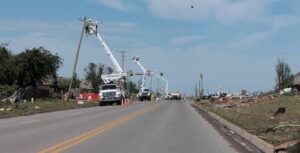
Future of Work #3: Building Pathways Through the Rubble
November 3, 2026

The Future of Work webinar series presented by Pasadena City College’s Economic and Workforce Development division (PCC EWD) has concluded with an exceptional discussion about connecting an emerging workforce to address the challenges posed by 2025’s devastating wildfires. The three panelists who joined the October 29, 2026 conversation brought with them decades of workforce and economic experience and education. Their respective opinions and perspectives shed more light on what it will take for the Los Angeles region to fully recover from the wildfire’s destruction. The underlying message: “We need to work together to put people back to work, get businesses back on their feet, and help communities get back to normal.”
As the inaugural Director of the LA County Department of Economic Opportunity (DEO), Ms. LoBianco has more than 20 years in workforce-related leadership roles, from Assistant Commissioner of the New York City Department of Small Business Services to Executive Director of the LA County Economic and Workforce Department. Her focus has always been on helping workers and businesses achieve their best success. In her current role, she and her team pursue regional strategies to unlock the vast potential of those integral industrial communities. Her deep knowledge of the nexus between workers, their employers, and their industries makes her appearance here especially vital to the conversation.
Over the course of her 14 years with this organization, Ms. Bell has joined or led several economic-related committees in their pursuit of a better-trained, better-paid workforce. The short list includes the Association of Chamber of Commerce Executives (ACCE), the Fellowship for Economic Mobility, the California Jobs First Los Angeles County Collaborative Steering Committee, and the USC EdPolicy Hub Advisory Board, to name just a few. Her commitment to both education and workforce concerns makes her voice uniquely significant in this conversation.
Mr. Trogan brings two decades of dedicated public service to his role as ED for the Foothill Workforce Development Board (FWDB). He brings with him focused skills developed as the Chief Programs Manager for Beacon Harbor, and as the Special Projects Development Manager for the South Bay Workforce Investment Board. In his current role, he collaborates with the Board’s 32 members to develop and maintain the vital connections between regional businesses and industries and the educational resources that produce their workforce.
This discussion revolved around how well (or not) the region is faring in its ‘rebuild and recover’ efforts. The 2025 wildfires destroyed thousands of acres of urban and rural land, thousands of homes, and most of both the Palisades and Altadena communities. Much of the first two years post-flames have been spent assessing the extent of the destruction, the community’s capacity to respond to those damages, and gathering the resources needed to recover the region, as much as possible, to its past glory. These panelists were eager to share their opinions on where that process is and what needs to be done to get it over the ‘finish line.’ They are talking, of course, about the workforce element of the recovery project and how it has evolved – and continues evolving – to be truly responsive to the regions’ still urgent needs.
The conversation began with a data presentation by Jesse Torres, Founder and Principal of Arroyo West LLC. Mr. Torres consults with governments, agencies, businesses, and schools on critically important civic and social projects, many of which focus on workforce development initiatives. His data encompasses the relevant statistics that are driving the recovery process:
Despite these concerns, Mr. Torres suggests that there is definitely enough investment – in both financial and human terms – for the region to move smoothly through the recovery process, so long as it remains focused on achieving that goal. He advocates for steady development by all agencies across several elements of rebuilding activities, and suggests recovery participants follow these processes to ensure not just success at this moment, but also to be better prepared for the next regional calamity:
With these parameters in mind, Dr. Salvatrice Cummo, VP, PCC EWD, led the webinar conversation about how the LA community can populate the rebuild and recovery process with projects that build pathways to better jobs and a stronger community, capable of withstanding the next regional disaster. The summary of that chat will be the subject of our next Pulse Newsletter.