

Future of Work: PCC Responds to Wildfire Challenge

Pam Sornson, JD

The 2026 Pasadena City College Future of Work Webinar series (PCC) (FOW), hosted by the school’s Economic and Workforce Development division (EWD), concludes on October 29 with session #3 (register here). In its first two presentations, PCC EWD leadership, wildfire experts, industry responders, and fire survivors shared their stories and concerns about how the conflagration affected them, and the challenges they’re still facing as they work toward recovery. Meanwhile, various reports and studies have been released that explain how and why the 2025 Palisades and Eaton fires were as lethal and catastrophic as they were. By all accounts, the wildfires and their aftermath have changed how the region can and should manage future wildfires. The conversations have also clarified the importance of having a home-base partner providing foundational support throughout any such ordeal. In this case, that foundational partner was Pasadena City College itself.

Providing Resources From the Beginning

The fires began early on the morning of January 7, 2025, in two separate locations:

  • The first fire – dubbed the Palisades fire – began in the hills north of Los Angeles in the Santa Monica Mountains, home to several exclusive communities. This fire moved west with the wind, taking many lives, destroying millions of dollars of pricey real estate and causing billions of dollars in damages.
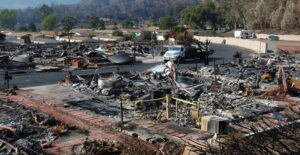
  • The second fire – the Eaton fire – began in the nearby San Gabriel Mountains to the east. It devastated the City of Altadena and many surrounding neighborhoods, also taking lives and causing billions in damages.

Strong Santa Ana winds drove both fires, and a decade of drought left hillsides and properties dry and full of tinder. The fact that each fire exploded at approximately the same time added significant challenges and confusion for first responders by splitting their resources and confounding communications channels. Within the first hour, virtually all available fire, community, and police resources were already at the scenes or racing toward them.

Because of its proximity to the Eaton fire, PCC leaders immediately stepped up and offered all their resources, as well, to assist in the firefighting effort. The fires themselves burned through to the end of the month, but PCC’s initial response came well before then.

  • By the morning of January 8, just a day after the fires began, PCC leaders closed the campus for class purposes but kept spaces available as shelters for those with no other options.
  • On January 9, with its Emergency Operations Center (EOC) already up and running:
    • PCC partnered with LA’s Metropolitan YMCA to distribute essential supplies to whoever needed them, including water, prepackaged foods, hygiene kits, and more.
    • In partnership with the Pasadena Unified School District, PCC also began providing meals for any affected person or family, serving a thousand meals per day from its Colorado campus.
    • The school also began gathering data in the form of its PCC Fire Recovery Needs Assessment Form. The information gathered was used to inform support, logistical, and tactical decisions.
  • On January 16, 2025, the school messaged its constituents that any of those who were affected by the fires would be eligible for financial support from the PCC Foundation through its Community Relief Fund. The administration had scoured its records and learned that many PCC students, staff, and faculty lived in nearby Altadena. Even if their homes weren’t threatened (at that time), they were still subject to evacuation orders that prevented them from returning to those homes until it was safe to do so.

Throughout the month of January, PCC continued to find ways to maximize its resources to best support both the firefighting community and the communities affected by the flames:

  • Its Parking Lot 3 became a community relief hub, where donations were accepted, sorted, and distributed to the thousands of displaced home and business owners. In addition to PCC volunteers, groups from across the region contributed resources, money, and effort to fire victims, including the YMCA of Metropolitan Los Angeles, the Young 9 Foundation, the Pasadena Unified School District, the Rotary Club of Pasadena, and the Pasadena Humane Society.
  • More than 20 of PCC’s nursing students, graduates, and faculty volunteered at LA’s Convention Center, which was used as an evacuation center. These volunteers cared for and treated the hundreds of Victims, firefighters, and anyone else who had suffered physical injuries caused by the fires.
  • In partnership with the YMCA of LA, PCC opened free childcare facilities on January 14, just one week after the fires ignited. This resource provided critical child care and support to countless essential workers, first responders, and community families affected by the flames.
  • The school also opened a Local Assistance and Disaster Recovery Center on its Colorado campus, which offered convenient access to many agencies and service providers: the Federal Emergency Management Agency (FEMA), California’s Employment Development Department (EDD), PCC’s Small Business Development Center (SBDC), and a series of LA county-based and non-profit groups.

It wasn’t long before PCC’s activities in support of all fire-affected groups drew the attention of the Ballmer Group, a notable LA philanthropic corporation. The highly respected charity not only applauded the school for its efforts but also donated $1 million to the PCC Community Relief Fund to further those actions.

Maintaining Resources Through and After the Crisis

Throughout the ordeal of the actual fires, PCC hosted, developed, or coordinated connections to a full panoply of support services for both its college constituents and its regional neighbors, including but not limited to:

  • Mental health services from both internal PCC resources and federally sponsored agencies (FEMA).
  • Financial aid that was facilitated through the California Fire Foundation’s SAVE program, and Los Angeles County through its 211 LA County financial aid agency.
  • Temporary housing for the thousands of displaced residents was also facilitated through the 211LACounty.org resource.

After the flames were finally quenched, PCC continued its drive to provide all the resources it could to assist victims and help the community recover. While programs continued on site, college leadership took note of the challenges revealed by (not caused by) the fires and committed to addressing those longer, more involved issues in addition to providing short- and mid-term relief options. Insufficient numbers of firefighters, communications challenges, and other systems-related errors and gaps made fighting the fires much more difficult. Also, the lack of a fully trained and skilled construction workforce is currently severely hampering the recovery strategy.

PCC’s efforts to address and alleviate these concerns are ongoing, and the school, as both an education provider and a dedicated community member, is working hard to help the LA region recover with resilience. If its highly lauded assistance during the fires is any indication, its responses to the problems those fires revealed should be equally impressive.

RELATED ARTICLES

Future of Work: PCC Responds to Wildfire Challenge
The Future of Work: Defining ‘Resilience’
PCC’s Future of Work Webinar Series Focuses on Wildfire Recovery

EXPLORE TOPICS & CATEGORIES